Supplements for Long COVID: What Actually Helps
Long COVID / Post-Acute Sequelae of COVID (PASC) has pushed many people toward supplements in search of relief from fatigue, brain fog, and everything in between. That makes sense. When conventional options are limited, supplements feel like something you can actually act on.
And in fact, supplement use increased significantly during the COVID-19 pandemic, with studies showing substantial uptake of vitamins and nutraceuticals for both prevention and symptom management (Hamulka et al., 2020; Lippi et al., 2021). But most of the information out there isn’t especially helpful, or worse, confusing and contradictory.
It tends to reduce long COVID to a single problem with a single solution. A list of “top supplements,” repeated over and over, with very little context. What helps one person can do very little for another. And in some cases, it can make things worse. Many people with long COVID have already experienced this firsthand—trying something that looks promising on paper, only to feel more fatigued, more reactive, or simply no different at all.
There’s also a reason for this pattern. In conditions with overlapping biology, such as ME/CFS, supplement use has long been a common self-management strategy, particularly in the absence of consistently effective treatments and approved medications (Castro-Marrero et al., 2017).
So the issue is not just which supplements to take. It’s understanding why a supplement might help in the first place and when it’s unlikely to. This guide takes a more targeted approach.
Instead of running through another generic list, we’ll look at how different supplements map onto the underlying biology of long COVID / PASC—and how to think about using them in a way that is more precise and often more restrained.
Why Supplements Often Fail in Long COVID
Supplements are everywhere in the long COVID space. And most people who have been dealing with this illness for more than a few months have already tried at least a handful—often more.
Some help a little. Many do nothing. A few make things worse.
Long COVID is not a single process. It’s a mix of mitochondrial dysfunction, immune changes, gut disruption, and vascular issues. A supplement that targets one of those may be irrelevant to the others.
There are also practical limitations that rarely get discussed. Many supplements are poorly absorbed. Others are underdosed. Some never reach the tissue they’re supposed to act on. On paper, they look promising. In the body, they don’t do much.
And then there’s tolerance. A significant number of people with long COVID develop sensitivities to supplements, foods, and even small formulation changes. What looks like a “low-risk” intervention can quickly become another trigger.
So when supplements don’t work, it’s not always because the idea was wrong. Often, it’s because the dose or formulation wasn’t right or the product never had a real chance to work in the first place.
A More Useful Way to Think About Supplements
It’s easy to fall into the mindset of searching for the “right” supplement. The one that finally makes a difference. But in practice, that approach rarely works.
A better question is: What is this supplement actually trying to do?
Is it supporting mitochondrial function? Modulating immune signaling? Affecting the gut microbiome? Improving membrane integrity?
Once you understand the target, you can start to see whether it makes sense for your symptoms—and just as importantly, whether it doesn’t. This also helps avoid one of the most common traps: taking multiple supplements that all do roughly the same thing, without realizing it.
Supplements are not a protocol. They’re tools. And they only make sense when they’re matched to the right problem.
Mitochondrial and Energy Support

Fatigue in long COVID is often described as a lack of energy, but that framing is too simplistic. What we’re likely dealing with is impaired energy production—at the level of the mitochondria—along with shifts in how the body uses fuel.
This is where supplements like CoQ10, creatine, carnitine, and alpha-lipoic acid come in. They’re often grouped together under “energy support,” but they work in different ways. Some support electron transport. Others affect substrate availability or redox balance.
In practice, the results are mixed. Some people notice a modest improvement—slightly more stable energy, a shorter crash, a bit more cognitive clarity. Others feel no change at all.
That doesn’t mean these supplements aren’t useful. But it does mean expectations need to be realistic. When they help, the effect is usually incremental, not dramatic.
If you want to explore these in more detail, you can read about howCoQ10 supports mitochondrial function in long COVID, how creatine affects energy metabolism and fatigue, how carnitine is used in mitochondrial dysfunction and postviral fatigue, and how alpha-lipoic acid interacts with oxidative stress and energy production check out these posts:
Read more →
Antioxidants and Redox Support
Oxidative stress is one of the most commonly discussed mechanisms in long COVID. But the way it’s usually presented is overly simplistic.
The idea that you can “fix” oxidative stress by taking a few antioxidant supplements doesn’t hold up in practice. Many people try this approach and feel no different. Some even feel worse.
Part of the issue is that oxidative stress is not a single, isolated problem. It reflects a broader imbalance in how the body produces and regulates reactive oxygen species, often tied to mitochondrial dysfunction, immune activation, and ongoing metabolic stress.
Another issue, one that gets far less attention, is bioavailability. Many antioxidant supplements look promising on paper but perform poorly in the body. They may be poorly absorbed, rapidly metabolized, or never reach the tissues where they are needed. In those cases, the mechanism may be sound, but the delivery fails.
This is why quality matters so much in this category. Compounds like NAC, sulforaphane, and certain phospholipid formulations have more plausible biological roles in long COVID. They can influence glutathione status, detoxification pathways, and membrane integrity. But even here, formulation and delivery determine whether they are effective.
And even when they are, the effects tend to be modest. You might notice slightly improved resilience, a bit less reactivity, or a small shift in cognitive clarity. What you’re unlikely to see is a dramatic reversal of symptoms.
That doesn’t make these supplements useless. It just means they need to be used with realistic expectations—and with attention to whether they are actually reaching where they need to go.
You can read more about how NAC supports glutathione and redox balance in long COVID, how sulforaphane influences cellular defense pathways, how curcumin affects inflammatory signaling in long COVID, along with considerations around bioavailability and formulation, and how phospholipids affect membrane function and oxidative stress in more detail below.
Read more →
Coagulation and Microclot Support
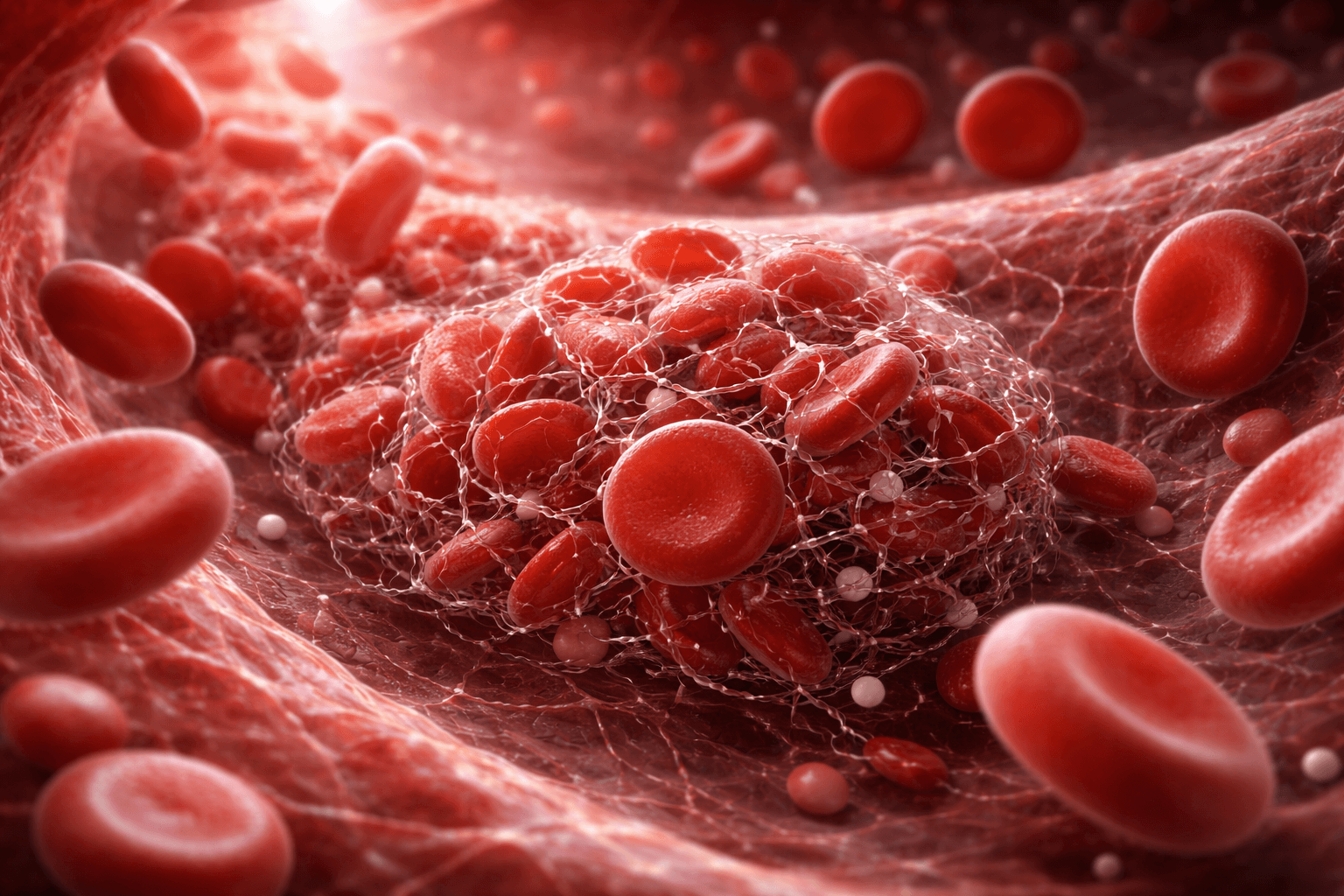
One of the more recent areas of interest in long COVID is the role of endothelial dysfunction and microclotting. This is still evolving, but there is growing evidence that impaired blood flow and fibrinolysis may contribute to symptoms like fatigue, brain fog, and exercise intolerance.
This is where enzymes like nattokinase and lumbrokinase are often discussed. These are targeted tools that influence fibrin breakdown and blood flow. For some patients, this approach makes sense—particularly when symptoms suggest a vascular component. For others, it may do very little.
These compounds can affect coagulation. They may interact with medications. And they are not appropriate in all clinical situations. It is often advised to take them under medical supervision.
You can read more about how nattokinase and lumbrokinase support fibrinolysis and microclot breakdown in long COVID below.
Read more →
Gut Health and Microbiome Support
Gut dysfunction is one of the most overlooked drivers of symptoms in long COVID. This includes changes in the microbiome, altered fermentation, increased gut-derived metabolites, and disruptions in barrier function.
Many people intuitively turn to probiotics. And sometimes that helps. But just as often, it doesn’t.
In some cases, probiotics can worsen symptoms—especially in those with SIBO, histamine-related issues, or altered fermentation patterns. What is marketed as “gut support” can end up increasing bloating, brain fog, or reactivity. This is why a one-size-fits-all approach doesn’t work here.
Monolaurin is another compound that is sometimes used, particularly in the context of microbial balance. But like many supplements, it can provoke strong reactions in sensitive individuals. It requires context—what is happening, where it is happening, and how the system is currently functioning.
You can read more about how probiotics and synbiotics affect gut function in long COVID, and how monolaurin is used in the context of microbial imbalance in more detail below.
Read more →
Foundational Nutrients That Still Matter
It’s easy to overlook basic nutrients when you’re dealing with a complex condition. Magnesium, for example, plays a role in hundreds of enzymatic reactions, including those related to energy production, nervous system regulation, and muscle function. And yet, many people are functionally low.
Multivitamins are less exciting, but they can help fill in gaps, particularly in people with restricted diets, malabsorption, long-term medication usage, or increased physiological demand. These are not targeted interventions. They’re foundational. And in some cases, addressing these basics can make other interventions more effective—or at least more tolerable.
You can read more about how magnesium supports the nervous system and metabolic function in long COVID and how multivitamins help address underlying nutrient gaps.
Read more →
How to Choose the Right Supplements for Long COVID
A more effective approach is usually more restrained. Start with a clear question: What are you trying to target?
Energy production? Gut function? Immune reactivity? From there, choose one supplement that aligns with that mechanism. Introduce it slowly. Pay attention to how your body responds—not just in the first few days, but over time.
This is especially important for people who are sensitive or prone to crashes. In those cases, even a well-chosen supplement can be too much if introduced too quickly. It’s about doing the right thing, at the right time, in a way your body can tolerate.
When Supplements Make Things Worse
This is something many people with long COVID learn the hard way. A supplement that looks promising leads to increased fatigue, brain fog, GI symptoms, or a general sense of instability.
There are several reasons for this. The gut may not tolerate the compound. The immune system may react to it. The nervous system may be too sensitive to handle the change. In some cases, the formulation itself—fillers, binders, or additives—can be the issue. This doesn’t necessarily mean the supplement is inappropriate. It may mean the timing is wrong. Or the dose is too high. Or the system needs to be stabilized first. Understanding this can prevent a lot of unnecessary frustration and a lot of wasted money.
Supplements can be useful. But they are not the foundation of recovery in long COVID or other postviral illnesses. They don’t replace diet, pacing, or the broader work of stabilizing the body. At best, they provide support—small, incremental shifts that can add up over time.
Need Help Making This More Targeted?
If you’ve read through this and are still unsure where to start, that’s completely normal. One of the biggest challenges with supplements in long COVID is not a lack of options—it’s knowing which ones actually make sense for your specific symptoms, and which ones are likely to waste your time, money, or energy.
This is where a more individualized approach can make a difference. In my consultations, I help people build focused, realistic supplement strategies based on their symptom patterns, tolerance, and current health status—without relying on large protocols or unnecessary products.
If that’s something you’re looking for, you can learn more here:
FAQ: Supplements for Long COVID
-
They can—but the effects are usually modest.
Some supplements may support specific biological processes involved in long COVID, such as energy production, immune regulation, or gut function. But they are not a cure, and results vary widely between individuals.
In practice, when a supplement helps, it’s often a small but meaningful improvement rather than a dramatic change.
-
There isn’t a single “best” supplement.
What helps depends on the underlying issue—whether that’s mitochondrial dysfunction, inflammation, gut disruption, or something else. A supplement that works well for one person may do very little for another.
A more useful approach is to match the supplement to the mechanism you’re trying to target.
-
This is more common than most people expect.
Many individuals with long COVID develop sensitivities to supplements. Reactions can come from the active ingredient, the dose, or even the formulation (fillers, binders, or delivery system).
Gut dysfunction, immune reactivity, and nervous system sensitivity all play a role.
When symptoms worsen, it often means the supplement is not well tolerated—or not appropriate at that stage.
-
Usually fewer than you think.
Taking multiple supplements at once makes it difficult to know what is helping and increases the risk of side effects or interactions. Many people do better with a more targeted approach—introducing one supplement at a time and adjusting based on response.
More is not necessarily better, especially in sensitive individuals.
-
Not always—but quality does matter.
Some higher-cost supplements use better forms or delivery systems that improve absorption. Others are simply more expensive without offering meaningful advantages.
The key is not price, but whether the supplement is well-formulated and bioavailable.
-
If a supplement is helpful, changes are usually gradual.
You might notice small improvements over days to weeks—slightly better energy, clearer thinking, or improved tolerance to activity. Large or immediate effects are less common.
If nothing changes after a reasonable trial, it may not be the right fit.
-
It depends.
Some supplements are used based on symptoms and clinical reasoning. Others are better guided by testing, especially when addressing nutrient deficiencies.
Testing can be helpful, but it’s not always necessary for every intervention.
-
No.
Supplements can support recovery, but they are not the foundation. Diet, pacing, sleep, and overall metabolic stability tend to have a much larger impact.
Supplements work best when they are part of a broader, well-structured approach.
References
Hamulka J, Jeruszka-Bielak M, Górnicka M, Drywień ME, Zielinska-Pukos MA. Dietary Supplements during COVID-19 Outbreak. Results of Google Trends Analysis Supported by PLifeCOVID-19 Online Studies. Nutrients. 2020;13(1):54. Published 2020 Dec 27. doi:10.3390/nu13010054
Lordan R. Dietary supplements and nutraceuticals market growth during the coronavirus pandemic - Implications for consumers and regulatory oversight. PharmaNutrition. 2021;18:100282. doi:10.1016/j.phanu.2021.100282
Castro-Marrero J, Sáez-Francàs N, Santillo D, Alegre J. Treatment and management of chronic fatigue syndrome/myalgic encephalomyelitis: all roads lead to Rome. Br J Pharmacol. 2017;174(5):345-369. doi:10.1111/bph.13702