Viral Persistence in the Gut in Long COVID and ME/CFS
In both long COVID / post-acute sequelae of COVID (PASC) and ME/CFS, there is growing evidence that viral material can persist in the body—particularly in the gut—long after the acute phase has passed (Zollner et al., 2024).
This does not mean an active infection in the traditional sense. But it may help explain why symptoms continue, shift, and resist standard treatment approaches.
More importantly, it points to something actionable: the gut is one of the most consistently affected systems in postviral illness—and one of the few we can actually influence.
This article will walk through what viral persistence in the gut actually means, how it has been observed in both long COVID and ME/CFS, and why it remains clinically relevant even in the absence of obvious digestive symptoms.
What Is Viral Persistence—and Why the Gut?
Viral persistence doesn’t mean the body is fighting an active, spreading infection. In many cases, it refers to viral genetic material or proteins that remain in tissue and continue to stimulate the immune system.
In long COVID, studies have detected SARS-CoV-2 RNA in stool and intestinal tissue months after infection (Natarajan et al., 2022; Zuo et al., 2021). Reviews like Zollner et al. (2024) also describe ongoing immune activation in the gut long after the acute phase has passed.
The gut is a logical place for this to happen. It contains a large portion of the body’s immune cells and is constantly exposed to antigens. Once that environment is disrupted, it can remain immunologically active—even if the original infection is no longer detectable in the bloodstream.
Lessons from ME/CFS: This Isn’t a New Idea
Long COVID is not the first condition where viral persistence in tissue has been proposed. In ME/CFS, research going back decades has pointed to persistent viral material in tissue. John Chia identified enteroviral proteins in stomach biopsies of patients, suggesting chronic infection in gut-associated tissue (Chia & Chia, 2008). Earlier studies detected enteroviral RNA in muscle in postviral fatigue syndromes (Archard et al., 1988).
These weren’t aggressive infections. They appeared to be low-level and persistent, but still capable of triggering immune responses.
That distinction is important. It suggests that symptoms may be driven not by active infection but by ongoing immune signaling.
Gut Involvement Without Digestive Symptoms
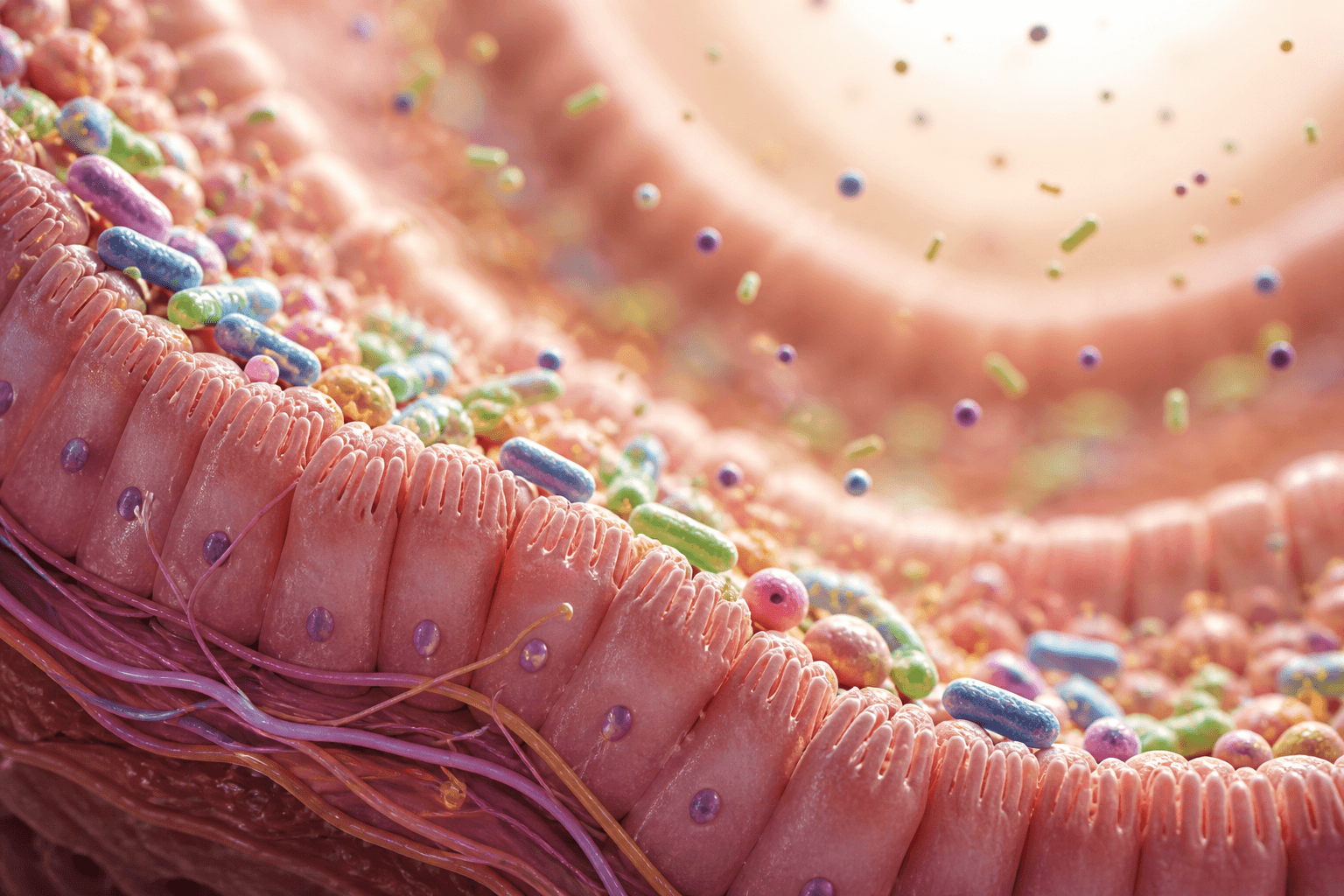
One of the more important points is that gut involvement doesn’t require obvious GI symptoms.
Patients may not report bloating, diarrhea, or abdominal pain. And yet, studies still show:
persistent viral material
microbiome disruption
immune activation in gut tissue
(Zollner et al., 2024; Zuo et al., 2021)
The gut influences far more than digestion. It shapes immune responses, produces signaling molecules, and communicates with the nervous system.
So when it’s disrupted, the effects don’t stay local. They can show up as fatigue, brain fog, orthostatic intolerance, or systemic inflammation.
From Viral Persistence to Systemic Symptoms
If viral material remains in the gut, even at low levels, it may contribute to a broader pattern:
continued antigen exposure
chronic immune activation
disruption of the intestinal barrier (intestinal “leakiness”)
shifts in microbiome composition
These processes feed into each other.
Barrier dysfunction can allow bacterial components like lipopolysaccharide (LPS) to enter circulation. Microbiome changes can alter immune signaling. Over time, this can sustain a low-grade inflammatory state.
This won’t apply to every patient. But it shows up often enough to be relevant.
What the Research Does and Does Not Show
Nutritional strategies are not a cure for viral persistence. They don’t eliminate viral reservoirs, and they shouldn’t be framed that way. What they can do is influence the environment where these processes are occurring.
Diet affects the microbiome, supports gut cell turnover, and shapes immune signaling in the gut. These effects are modest, but they are real.
A more grounded way to think about this is:
The gut is one of the most consistently affected systems in postviral illness—and one of the few that can be meaningfully modified.
That doesn’t mean it explains everything. But it does make it a rational place to focus.
MCAS, the Gut, and Postviral Illness
Many patients with long COVID and ME/CFS develop symptoms consistent with mast cell activation (MCAS). Mast cells are found throughout the body, but a large proportion are located in the gut, where they interact with microbial and dietary signals.
While mast cell activation is systemic, the gut is one of the main environments where it appears to be triggered and sustained in postviral illness. This may help explain why some patients respond to gut-focused strategies even without clear digestive symptoms.
Why the Gut Still Deserves Attention
We don’t yet have clinical trials showing that gut-directed therapies resolve long COVID or ME/CFS.
But we do have consistent evidence that the gut is involved—immunologically, structurally, and metabolically.
That shifts the focus. We may not have evidence that diet treats long COVID or ME/CFS directly. But we do have consistent evidence that the gut is involved. Ignoring that doesn’t make much sense clinically.
Even when viral persistence isn’t clearly demonstrated, the downstream effects on the gut—dysbiosis, barrier dysfunction, immune signaling—are often present and, importantly, modifiable.
That’s where nutrition fits: not as a cure, but as part of a broader, physiology-based approach to symptom management.
FAQ: Viral Persistence in the Gut in Long COVID and ME/CFS
-
Some studies have detected SARS-CoV-2 RNA in stool and intestinal tissue months after infection (Natarajan et al., 2022; Zollner et al., 2024). This is referred to as viral persistence. It does not necessarily mean an active infection, but it may contribute to ongoing immune activation in some patients.
-
Viral persistence refers to the continued presence of viral RNA or proteins in the body after the acute infection has resolved. In long COVID / Post-Acute Sequelae of COVID (PASC), this has been observed in tissues like the gut and may help explain ongoing symptoms in some individuals.
-
Yes. Research shows that gut involvement can occur even in patients without obvious gastrointestinal symptoms (Zollner et al., 2024). The gut plays a central role in immune regulation, so dysfunction may present as fatigue, brain fog, or systemic inflammation rather than digestive complaints.
-
There is evidence that some patients with ME/CFS have persistent viral material, particularly enteroviruses, in gut-associated tissue (Chia & Chia, 2008). However, ME/CFS is a heterogeneous condition, and not all cases can be explained by a single viral mechanism.
-
The gut is one of the body’s main immune interfaces. It influences inflammation, microbiome balance, and barrier function. In both long COVID and ME/CFS, these systems are often disrupted, making the gut a key area of interest.
-
There is currently no strong clinical evidence that diet, probiotics, or prebiotics directly treat long COVID or ME/CFS (Zollner et al., 2024). However, these approaches can influence the gut environment, which may play a role in symptom management.
-
Gut dysfunction can contribute to fatigue through several mechanisms, including immune activation, altered microbiome signaling, and increased intestinal permeability. These processes can affect energy metabolism and inflammation throughout the body.
-
Not every patient will have the same underlying drivers, but the gut is one of the most consistently affected systems in postviral illness. For that reason, it is often a reasonable area to consider as part of a broader management strategy.
References
Zollner A, Meyer M, Jukic A, Adolph T, Tilg H. The Intestine in Acute and Long COVID: Pathophysiological Insights and Key Lessons. Yale J Biol Med. 2024;97(4):447-462. Published 2024 Dec 19. doi:10.59249/PMIE8461
Natarajan A, Zlitni S, Brooks EF, et al. Gastrointestinal symptoms and fecal shedding of SARS-CoV-2 RNA suggest prolonged gastrointestinal infection. Nat Commun. 2022;13:4213.
Zuo T, Liu Q, Zhang F, et al. Depicting SARS-CoV-2 faecal viral activity in association with gut microbiota composition in patients with COVID-19. Gut. 2021;70(2):276–284.
Chia JK, Chia AY. Chronic fatigue syndrome is associated with chronic enterovirus infection of the stomach. J Clin Pathol. 2008;61(1):43–48.
Archard LC, Bowles NE, Behan PO, Bell EJ, Doyle D. Postviral fatigue syndrome: persistence of enterovirus RNA in muscle. J R Soc Med. 1988;81(6):326–329.